- The 64
- Hexagram 3
3 屯 Sprouting
震 Thunder below, 坎 Water above
Thunder under water: the first stirring, and the difficulty of beginning. The text says it gets through greatly, that movement should not be undertaken lightly, and that this is a time to appoint helpers.
Tap a line of the figure to see where it leads when it changes. Cast for a question of your own. New here? What the I Ching is, coming from tarot.
This site's reading
卦辭 屯 is the sprout pushing against the ground. The Judgment gives it the full four marks, 元亨利貞, then two cautions: do not set out now (勿用有攸往), and establish lords (利建侯), the people who will hold things while you cannot.
彖 The commentary: firm and yielding have just met and difficulty is born; movement in the midst of danger. Thunder and rain fill everything; heaven makes a time of grass and darkness (草昧), the first disorder; appoint lords and do not expect rest.
大象 Clouds and thunder: the noble person weaves the threads (經綸), the word for the warp and weft of government. In a tangle, order is made by arranging, not by pulling.
爻 The lines are a horse that will not go: turning back at the first step, better to stay and appoint helpers; the team wheeling, a suitor who is no bandit, a woman who waits ten years to wed; chasing deer without a guide into the forest, which the wise give up; the team wheeling again, but seeking the match and going is good; rich favours held back, small firmness good, large firmness bad; and at the top the team wheeling and tears of blood. The middle lines show the way: accept help and the right match; do not chase alone.
If your question is about
- A relationship
- The suitor at the gate is not a bandit (line 2): a slow, awkward start that works if you do not force the pace.
- Work
- Set up the people and the structure first (利建侯); do not launch into the open. Chasing the deer without a guide ends in the forest.
- A decision
- Not yet. The text says do not set out; arrange what you have and find a guide.
- No line changing
- The difficulty of beginning, as a state: things sprout and keep sprouting. Weave; do not pull.
Written from the text above and checked against it by Lun (2026-10-24). It is a way of reading the hexagram, not a prediction.
The text, with Legge
Judgment 卦辭
屯:元亨,利貞。勿用有攸往,利建侯。
Kun (indicates that in the case which it presupposes) there will be great progress and success, and the advantage will come from being correct and firm. (But) any movement in advance should not be (lightly) undertaken. There will be advantage in appointing feudal princes. (Legge, 1882)
Commentary on the Judgment 彖
屯,剛柔始交而難生,動乎險中,大亨貞。雷雨之動滿盈,天造草昧,宜建侯而不寧。
The Image 大象
雲雷,屯;君子以經綸。
The six lines
Line 1 初九
磐桓,利居貞,利建侯。
The first line, undivided, shows the difficulty (its subject has) in advancing. It will be advantageous for him to abide correct and firm; advantageous (also) to be made a feudal ruler. (Legge, 1882)
The Image 小象
雖磐桓,志行正也。以貴下賤,大得民也。
Changing, this line leads to 8 比 Bǐ.
Line 2 六二
屯如邅如,乘馬班如,匪寇婚媾,女子貞不字,十年乃字。
The second line, divided, shows (its subject) distressed and obliged to return; (even) the horses of her chariot (also) seem to be retreating. (But) not by a spoiler (is she assailed), but by one who seeks her to be his wife. The young lady maintains her firm correctness, and declines a union. After ten years she will be united, and have children. (Legge, 1882)
The Image 小象
六二之難,乘剛也。十年乃字,反常也。
Changing, this line leads to 60 節 Jié.
Line 3 六三
即鹿无虞,惟入于林中,君子幾不如舍,往吝。
The third line, divided, shows one following the deer without (the guidance of) the forester, and only finding himself in the midst of the forest. The superior man, acquainted with the secret risks, thinks it better to give up the chase. If he went forward, he would regret it. (Legge, 1882)
The Image 小象
即鹿无虞,以從禽也。君子舍之,往吝窮也。
Changing, this line leads to 63 既濟 Jì Jì.
Line 4 六四
乘馬班如,求婚媾,往,吉无不利。
The fourth line, divided, shows (its subject as a lady), the horses of whose chariot appear in retreat. She seeks, however, (the help of) him who seeks her to be his wife. Advance will be fortunate; all will turn out advantageously. (Legge, 1882)
The Image 小象
求而往,明也。
Changing, this line leads to 17 隨 Suí.
Line 5 九五
屯其膏;小貞吉,大貞凶。
The fifth line, undivided, shows the difficulties in the way of (its subject’s) dispensing the rich favours that might be expected from him. With firmness and correctness there will be good fortune in small things; (even) with them in great things there will be evil. (Legge, 1882)
The Image 小象
屯其膏,施未光也。
Changing, this line leads to 24 復 Fù.
Line 6 上六
乘馬班如,泣血漣如。
The topmost line, divided, shows (its subject) with the horses of his chariot obliged to retreat, and weeping tears of blood in streams. (Legge, 1882)
The Image 小象
泣血漣如,何可長也。
Changing, this line leads to 42 益 Yì.
Words that came from it
Phrases a billion people use today began as clauses of this hexagram.
- 經綸
- to sort the threads of silk. Still the word for statecraft and for a person's learning: 滿腹經綸. From the Image 大象: 經綸.
In history
The 左傳 and 國語, the chronicles of the sixth to fifth centuries BC, record real casts of the Changes and what came of them. 3 of them gave this hexagram.
661 BC: 畢萬, a man of 畢 seeking office in 晉
Asked: Should I take service in 晉? The stalks gave 3 屯 with line 1 changing, to 8 比.
吉。《屯》固、《比》入,吉孰大焉?其必蕃昌。辛廖 called it very auspicious: 屯 means holding firm and 比 means being received. He read the trigrams as a lord's hexagram, thunder turned to earth, chariot following horse, feet to stand on, elder brother to lead, mother to shelter, people to gather, and said the man's house would flourish and his descendants recover his standing.
That year 晉獻公 gave 畢萬 the city of 魏 as a fief. His descendants became the 魏 family, which in 403 BC was recognised as a state in its own right.
左傳 閔公元年, 維基文庫 (revision 2675997). Told in retrospect (初) under the year 畢萬 was enfeoffed. The diviner's reading is by trigram imagery, not the received line text.
637 BC: 公子重耳, the future 晉文公, in exile at the court of 秦
Asked: Shall I have the state of 晉? The stalks gave 3 屯 turning to 16 豫.
不有晉國,以輔王室,安能建侯?我命筮曰:『尚有晉國』,筮告我曰:『利建侯』,得國之務也,吉孰大焉!The cast gave 屯 as the inner result and 豫 as the outer, all 八. The court diviners called it closed and blocked, nothing moving. 司空季子 disagreed: in the Changes both hexagrams say 'favourable to establish a lord'. He had asked for the state and the stalks answered with a lord's establishment: thunder and chariot, water and crowd.
秦 escorted 重耳 home in 636 BC and he took the throne as 晉文公. Six years later he beat 楚 at 城濮 and became hegemon.
國語 晉語四, 維基文庫 (revision 1998799). 貞屯悔豫皆八 is an old notation: 屯 as the first (貞) figure and 豫 as the second (悔), with the unmoved yin lines marked 八. Lines 1, 4 and 5 differ between the two figures, so no single moving line is given. The 國語 page carries 韋昭's commentary inline; the quote is from the main text.
540 BC: 孔成子, minister of 衛, on which son of 衛襄公 should succeed
Asked: Should 元 or his lame elder brother 縶 inherit 衛? The stalks gave 3 屯 with line 1 changing, to 8 比.
康叔名之.可謂長矣.孟非人也.將不列於宗.不可謂長.且其繇曰.利建侯.嗣吉.何建.建非嗣也.Two casts: whether 元 should hold 衛 gave 屯 unchanged; whether 縶 should be set up gave 屯 moving to 比. The scribe 史朝 read 元亨 and 'favourable to establish a lord' as the answer: establish, not inherit, so the younger boy, named by 康叔 in a dream, was the one. A lame man cannot serve at the altar.
孔成子 installed 元, who reigned as 衛靈公 from 534 to 493 BC.
左傳 昭公七年, 維基文庫 (revision 10445713). The entry carries the second cast, 屯之比; the first, 屯 with no moving line, is the same hexagram. 元 was born in the year 韓宣子 came to power in 晉, 540 BC, which is the year given; the passage stands under 535 BC. 利建侯 is in the received text of 屯.
The chronicles' diviners read from oracle texts of their own time; where their words match our clause text the note says so, and where they do not, it says that. None of this is a claim that the text foretold the event.
Related hexagrams
Where the name comes from
屯
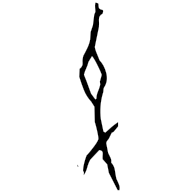 甲骨文 oracle bone · 商
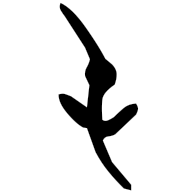 金文 bronze · 西周中期
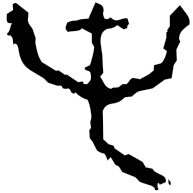 戰國文字 Warring States · 戰國.晉
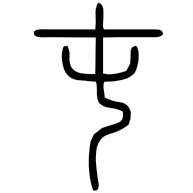 篆文 seal
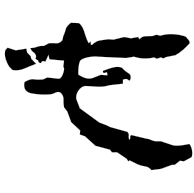 隸書 clerical · 西漢
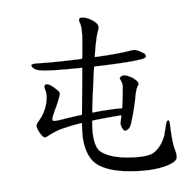 楷書 regular
Legge's note (1882)
Legge's title for the hexagram: difficulty (a plant struggling out of the earth).
III. The character called Kun is pictorial, and was intended to show us how a plant struggles with difficulty out of the earth, rising gradually above the surface. This difficulty, marking the first stages in the growth of a plant, is used to symbolise the struggles that mark the rise of a state out of a condition of disorder, consequent on a great revolution. The same thing is denoted by the combination of the trigrams that form the figure;—as will be seen in the notes on it under Appendix II. I have introduced within parentheses, in the translation, the words ‘in the case which the hexagram presupposes.’ It is necessary to introduce them. King Wăn and his son wrote, as they did in every hexagram, with reference to a particular state of affairs which they had in mind. This was the unspoken text which controlled and directed all their writing; and the student must try to get hold of this, if he would make his way with comfort and success through the Yî. Wăn saw the social and political world around him in great disorder, hard to be remedied. But he had faith in himself and the destinies of his House. Let there be prudence and caution, with unswerving adherence to the right; let the government of the different states be entrusted to good and able men:—then all would be well. The first line is undivided, showing the strength of its subject. He will be capable of action, and his place in the trigram of mobility will the more dispose him to it. But above him is the trigram of peril; and the lowest line of that, to which especially he must look for response and co-operation, is divided and weak. Hence arise the ideas of difficulty in advancing, the necessity of caution, and the advantage of his being clothed with authority. To the subject of the second line, divided, advance is still more difficult. He is weak in himself; he is pressed by the subject of the strong line below him. But happily that subject, though strong, is correct; and above in the fifth line, in the place of authority, is the strong one, union with whom and the service of whom should be the objects pursued. All these circumstances suggested to the duke of Kâu the idea of a young lady, sought in marriage by a strong wooer, when marriage was unsuitable, rejecting him, and finally, after ten years, marrying a more suitable, the only suitable, match for her. The third line is divided, not central, and the number of its place is appropriate to the occupancy of a strong line. All these things should affect the symbolism of the line. But the outcome of the whole hexagram being good, the superior man sees the immediate danger and avoids it. The subject of the fourth line, the first of the upper trigram, has recourse to the strong suitor of line 1, the first of the lower trigram; and with his help is able to cope with the difficulties of the position, and go forward. The subject of the fifth line is in the place of authority, and should show himself a ruler, dispensing benefits on a great scale. But he is in the very centre of the trigram denoting perilousness, and line 2, which responds to 5, is weak. Hence arises the symbolism, and great things should not be attempted. The sixth line is weak; the third responding to it is also weak; it is at the extremity of peril; the game is up. What can remain for its subject in such a case but terror and abject weeping?
Sources
- Chinese text: 周易, 維基文庫, page (revision 10643482); the text is public domain, the site's edits CC BY-SA 4.0.
- English: James Legge, The Yî King, Sacred Books of the East vol. XVI, Oxford 1882 (public domain), where this hexagram is “Kun”.
- Glyph images: 小學堂 字形演變, Academia Sinica (CC0 1.0).
- Pinyin: Unihan (Unicode License v3) with this site's readings for the classical cases. English gloss, relations, the idiom glosses, the English of the chronicle passages and the plain reading: this site.