- The 64
- Hexagram 60
60 節 Limits
兌 Lake below, 坎 Water above
Water above the lake, held by its banks: limits, measure, regulation. The text says it gets through, and that bitter limits cannot be kept.
Tap a line of the figure to see where it leads when it changes. Cast for a question of your own. New here? What the I Ching is, coming from tarot.
This site's reading
卦辭 亨。苦節不可貞: it gets through; bitter limits cannot be held to. A limit is the joint of bamboo, the division that makes the stalk strong; a limit that hurts does not last.
彖 The commentary: firm and yielding divided, the firm central. Bitter limits cannot be held because their way is exhausted. Pleased in facing danger, limits in their proper place, central and correct and so getting through. Heaven and earth have their limits and the seasons are made; limits set by measure do not waste wealth or harm the people.
大象 Water over the lake: the noble person sets measures and numbers and deliberates virtue and conduct. Limits are made, not suffered.
爻 The lines: not leaving the inner court, no blame; not leaving the outer court, evil; no limits, and then sighing, no blame; limits at ease, it gets through; sweet limits, good, going is honoured; and at the top bitter limits, firmness and yet evil, regret gone. The same act, staying in, is right at line 1 and wrong at line 2; the sweet limit (line 5) is the model.
If your question is about
- A relationship
- Measure, not restriction: sweet limits (line 5) hold, bitter ones (line 6) do not. Staying in is right one moment, wrong the next.
- Work
- Set the numbers and measures yourself (the Image); limits that do not waste or harm last. Limits at ease (line 4) get through.
- A decision
- Decide the measure and keep it sweet; a limit that costs too much is abandoned anyway. Going is honoured when the limit is kind.
- No line changing
- Limits as a state: the banks hold. Keep them easy to keep; bitterness is the one thing the text says will not last.
Written from the text above and checked against it by Lun (2026-10-24). It is a way of reading the hexagram, not a prediction.
The text, with Legge
Judgment 卦辭
節:亨。苦節不可貞。
Kieh intimates that (under its conditions) there will be progress and attainment. (But) if the regulations (which it prescribes) be severe and difficult, they cannot be permanent. (Legge, 1882)
Commentary on the Judgment 彖
節,亨,剛柔分,而剛得中。苦節不可貞,其道窮也。說以行險,當位以節,中正以通。天地節而四時成,節以制度,不傷財,不害民。
The Image 大象
澤上有水,節;君子以制數度,議德行。
The six lines
Line 1 初九
不出戶庭,无咎。
The first line, undivided, shows its subject not quitting the courtyard outside his door. There will be no error. (Legge, 1882)
The Image 小象
不出戶庭,知通塞也。
Changing, this line leads to 29 坎 Kǎn.
Line 2 九二
不出門庭,凶。
The second line, undivided, shows its subject not quitting the courtyard inside his gate. There will be evil. (Legge, 1882)
The Image 小象
不出門庭,失時極也。
Changing, this line leads to 3 屯 Zhūn.
Line 3 六三
不節若,則嗟若,无咎。
The third line, divided, shows its subject with no appearance of observing the (proper) regulations, in which case we shall see him lamenting. But there will be no one to blame (but himself). (Legge, 1882)
The Image 小象
不節之嗟,又誰咎也。
Changing, this line leads to 5 需 Xū.
Line 4 六四
安節,亨。
The fourth line, divided, shows its subject quietly and naturally (attentive to all) regulations. There will be progress and success. (Legge, 1882)
The Image 小象
安節之亨,承上道也。
Changing, this line leads to 58 兌 Duì.
Line 5 九五
甘節,吉;往有尚。
The fifth line, undivided, shows its subject sweetly and acceptably enacting his regulations. There will be good fortune. The onward progress with them will afford ground for admiration. (Legge, 1882)
The Image 小象
甘節之吉,居位中也。
Changing, this line leads to 19 臨 Lín.
Line 6 上六
苦節,貞凶,悔亡。
The topmost line, divided, shows its subject enacting regulations severe and difficult. Even with firmness and correctness there will be evil. But though there will be cause for repentance, it will (by and by) disappear. (Legge, 1882)
The Image 小象
苦節貞凶,其道窮也。
Changing, this line leads to 61 中孚 Zhōng Fú.
Words that came from it
Phrases a billion people use today began as clauses of this hexagram.
- 制度
- to regulate by measures. The modern word for an institution or a system is this commentary's phrase. From the commentary on the Judgment 彖: 節以制度.
Related hexagrams
Where the name comes from
節
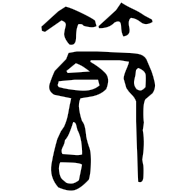 金文 bronze · 戰國.齊
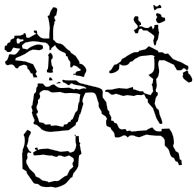 戰國文字 Warring States · 戰國.齊
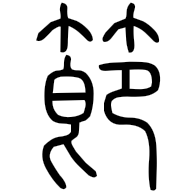 篆文 seal
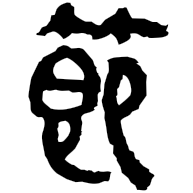 隸書 clerical · 秦
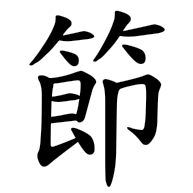 楷書 regular
Legge's note (1882)
Legge's title for the hexagram: regulations.
LX. The primary application of the character Kieh was to denote the joints of the bamboo; it is used also for the joints of the human frame; and for the solar and other terms of the year. Whatever makes regular division may be denominated a Kieh; there enter into it the ideas of regulating and restraining; and the subject of this hexagram is the regulations of government enacted for the guidance and control of the people. How the constituent trigrams are supposed to suggest or indicate this meaning will be seen in Appendix II. Kû Hsî anticipates that symbolism in trying to account for the statement that the figure gives the promise of success and attainment; but the ground of this is generally made out by referring to the equal division of the undivided and divided lines and our having in 2 and 5, the central places, two undivided lines. An important point concerning ‘regulations’ is brought out in the conclusion of the Thwan,—that they must be adapted to circumstances, and not made too strict and severe. Line 1 is strong, and in its correct place. Its subject therefore would not be wanting in power to make his way. But he is supposed to be kept in check by the strong 2, and the correlate 4 is the first line in the trigram of peril. The course of wisdom therefore is to keep still. The character here rendered door is that belonging to the inner apartments, leading from the hall into which entrance is found by the outer gate, mentioned under line 2. The courtyard outside the door and that inside the gate is one and the same. The ‘Daily Lecture’ says that the paragraph tells an officer not to take office rashly, but to exercise a cautious judgment in his measures. Line 2 is strong, in the wrong place; nor has it a proper correlate. Its subject keeps still, when he ought to be up and doing. There will be evil. Line 3 should be strong, but it is weak. It is neither central nor correct. It has no proper correlate, and it is the topmost line in the trigram of complacent satisfaction. Its subject will not receive the yoke of regulations; and he will find out his mistake, when it is too late. Line 4 is weak, as it ought to be, and its subject has respect to the authority of the strong ruler in 5. Hence its good symbolism and auspice. Line 5 is strong, and in its correct place. Its subject regulates himself, having no correlate; but he is lord of the hexagram, and his influence is everywhere beneficially felt. Line 6 is weak, in its proper place. The subject of the topmost line must be supposed to possess an exaggerated desire for enacting regulations. They will be too severe, and the effect will be evil. But as Confucius (Analects 3. 3) says, that is not so great a fault as to be easy and remiss. It may be remedied, and cause for repentance will disappear.
Sources
- Chinese text: 周易, 維基文庫, page (revision 2405027); the text is public domain, the site's edits CC BY-SA 4.0.
- English: James Legge, The Yî King, Sacred Books of the East vol. XVI, Oxford 1882 (public domain), where this hexagram is “Kieh”.
- Glyph images: 小學堂 字形演變, Academia Sinica (CC0 1.0).
- Pinyin: Unihan (Unicode License v3) with this site's readings for the classical cases. English gloss, relations, the idiom glosses, the English of the chronicle passages and the plain reading: this site.