- The 64
- Hexagram 42
42 益 Increase
震 Thunder below, 巽 Wind above
Wind over thunder: increase, the kind that comes from above giving to below. The text says it is a time to act, even to cross the great river.
Tap a line of the figure to see where it leads when it changes. Cast for a question of your own. New here? What the I Ching is, coming from tarot.
This site's reading
卦辭 Two sentences only: it is advantageous to have somewhere to go, and advantageous to cross the great stream. The name's character, 益, is a vessel with water running over its brim, which is what the hexagram means: more than enough, overflowing downward.
彖 The commentary says what kind of increase this is: 損上益下, the top is lessened so the bottom gains, and the people's joy has no bounds; a way that is greatly bright. Then the method: movement with gentleness (益動而巽), advancing day by day without limit. The rule that closes it, 凡益之道,與時偕行, every way of increase goes along with the time. Increase is not forced; it rides a moment.
大象 Wind and thunder together, each strengthening the other. The Image gives the noble person two habits: seeing what is good, move toward it; having a fault, correct it.
爻 The lines show increase received and given: used for a great undertaking; increase that cannot be refused, ten pairs of tortoise shells, and an offering to the Highest; increase even through hard events, kept honest by walking the middle; a sincere, kindly heart that need not ask; and at the top, no one adding to you, someone striking at you, a heart that will not hold still. The first five lines are good; the sixth is what happens when the giving stops.
If your question is about
- A relationship
- Increase flows from above to below: the one with more gives, and both gain. Hoarded giving, the top line says, turns into blows.
- Work
- A time to act, even to cross the great stream, with the gain shared downward. Move gently and with the moment.
- A decision
- The text says go. Check that the gain reaches the people below you in it, and that your heart holds still.
- No line changing
- Increase as a state: steady gain while the giving continues. Watch the sixth line's warning without living in it.
Written from the text above and checked against it by Lun (2026-10-24). It is a way of reading the hexagram, not a prediction.
The text, with Legge
Judgment 卦辭
益:利有攸往。利涉大川。
Yî indicates that (in the state which it denotes) there will be advantage in every movement which shall be undertaken, that it will be advantageous (even) to cross the great stream. (Legge, 1882)
Commentary on the Judgment 彖
益,損上益下,民說无疆,自上下下,其道大光。利有攸往,中正有慶。利涉大川,木道乃行。益動而巽,日進无疆。天施地生,其益无方。凡益之道,與時偕行。
The Image 大象
風雷,益;君子以見善則遷,有過則改。
The six lines
Line 1 初九
利用為大作,元吉,无咎。
The first line, undivided, shows that it will be advantageous for its subject in his position to make a great movement. If it be greatly fortunate, no blame will be imputed to him. (Legge, 1882)
The Image 小象
元吉无咎,下不厚事也。
Changing, this line leads to 20 觀 Guān.
Line 2 六二
或益之,十朋之龜弗克違,永貞吉。王用享于帝,吉。
The second line, divided, shows parties adding to the stores of its subject ten pairs of tortoise shells whose oracles cannot be opposed. Let him persevere in being firm and correct, and there will be good fortune. Let the king, (having the virtues thus distinguished), employ them in presenting his offerings to God, and there will be good fortune. (Legge, 1882)
The Image 小象
或益之,自外來也。
Changing, this line leads to 61 中孚 Zhōng Fú.
Line 3 六三
益之用凶事,无咎。有孚中行,告公用圭。
The third line, divided, shows increase given to its subject by means of what is evil, so that he shall (be led to good), and be without blame. Let him be sincere and pursue the path of the Mean, (so shall he secure the recognition of the ruler, like) an officer who announces himself to his prince by the symbol of his rank. (Legge, 1882)
The Image 小象
益用凶事,固有之也。
Changing, this line leads to 37 家人 Jiā Rén.
Line 4 六四
中行,告公從。利用為依遷國。
The fourth line, divided, shows its subject pursuing the due course. His advice to his prince is followed. He can with advantage be relied on in such a movement as that of removing the capital. (Legge, 1882)
The Image 小象
告公從,以益志也。
Changing, this line leads to 25 无妄 Wú Wàng.
Line 5 九五
有孚惠心,勿問元吉。有孚惠我德。
The fifth line, undivided, shows its subject with sincere heart seeking to benefit (all below). There need be no question about it; the result will be great good fortune. (All below) will with sincere heart acknowledge his goodness. (Legge, 1882)
The Image 小象
有孚惠心,勿問之矣。惠我德,大得志也。
Changing, this line leads to 27 頤 Yí.
Line 6 上九
莫益之,或擊之,立心勿恆,凶。
In the sixth line, undivided, we see one to whose increase none will contribute, while many will seek to assail him. He observes no regular rule in the ordering of his heart. There will be evil. (Legge, 1882)
The Image 小象
莫益之,偏辭也。或擊之,自外來也。
Changing, this line leads to 3 屯 Zhūn.
Related hexagrams
Where the name comes from
益
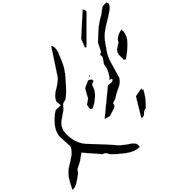 甲骨文 oracle bone · 商
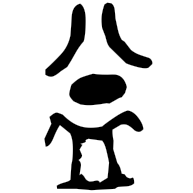 金文 bronze · 西周中期
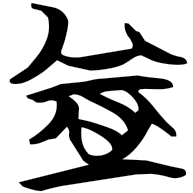 戰國文字 Warring States · 戰國.楚
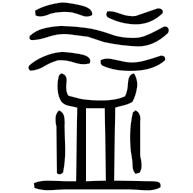 篆文 seal
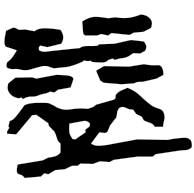 隸書 clerical · 秦
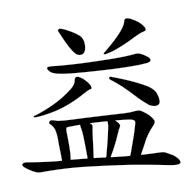 楷書 regular
Legge's note (1882)
Legge's title for the hexagram: addition, increasing.
XLII. Yî has the opposite meaning to Sun, and is the symbol of addition or increasing. What king Wăn had in his mind, in connexion with the hexagram, was a ruler or a government operating so as to dispense benefits to, and increase the resources of all the people. Two indications are evident in the lines;—the strong line in the ruler’s seat, or the fifth line, and the weak line in the correlative place of 2. Whether there be other indications in the figure or its component trigrams will be considered in dealing with the Appendixes. The writer might well say, on general grounds, of the ruler whom he had in mind, that he would be successful in his enterprises and overcome the ‘greatest difficulties. Line 1 is strong, but its low position might seem to debar its subject from any great enterprise. Favoured as he is, however, according to the general idea of the hexagram, and specially responding to the proper correlate in 4, it is natural that he should make a movement; and great success will make his rashness be forgotten. With paragraph 2 compare paragraph 5 of the preceding hexagram. Line 2 is weak, but in the centre, and is the correlate of 5. Friends give its subject the valuable gifts mentioned; ‘that is,’ says Kwo Yung (Sung dynasty), ‘men benefit him; the oracles of the divination are in his favour,—spirits, that is, benefit him; and finally, when the king sacrifices to God, He accepts. Heaven confers benefit from above.’ Line 3 is weak, neither central, nor in its correct position. It would seem therefore that its subject should have no increase given to him. But it is the time for giving increase, and the idea of his receiving it by means of evil things is put into the line. That such things serve for reproof and correction is well known to Chinese moralists. But the paragraph goes on also to caution and admonish. Line 4 is the place for a minister, near to that of the ruler. Its subject is weak, but his place is appropriate, and as he follows the due course, his ruler will listen to him, and he will be a support in the most critical movements. Changing the capital from place to place was frequent in the feudal times of China. That of Shang, which preceded Kâu, was changed five times. Line 5 is strong, in its fitting position, and central. It is the seat of the ruler, who has his proper correlate in 2. Everything good, according to the conditions of the hexagram, therefore, may be said of him;—as is done. Line 6 is also strong; but it should be weak. Occupying the topmost place of the figure, its subject will concentrate his powers in the increase of himself, and not think of benefiting those below him; and the consequence will be as described.
Sources
- Chinese text: 周易, 維基文庫, page (revision 10646726); the text is public domain, the site's edits CC BY-SA 4.0.
- English: James Legge, The Yî King, Sacred Books of the East vol. XVI, Oxford 1882 (public domain), where this hexagram is “Yî”.
- Glyph images: 小學堂 字形演變, Academia Sinica (CC0 1.0).
- Pinyin: Unihan (Unicode License v3) with this site's readings for the classical cases. English gloss, relations, the idiom glosses, the English of the chronicle passages and the plain reading: this site.