- The 64
- Hexagram 41
41 損 Decrease
兌 Lake below, 艮 Mountain above
The lake lowered to raise the mountain: decrease, giving from below. The text says that with sincerity this is greatly good, and that two bowls of grain are enough for the offering.
Tap a line of the figure to see where it leads when it changes. Cast for a question of your own. New here? What the I Ching is, coming from tarot.
This site's reading
卦辭 有孚,元吉。无咎,可貞,利有攸往。曷之用?二簋可用享: with sincerity, greatly good; no blame; firmness possible; advantageous to go. What to use? Two bowls will do for the offering. Decrease done sincerely is not loss.
彖 The commentary: decrease takes from below to add above; its way goes upward. Two bowls have their time; decreasing the firm and adding to the yielding has its time; decrease and increase, fullness and emptiness, go along with the time.
大象 The lake below the mountain: the noble person curbs anger and checks desire (懲忿窒欲). The first decrease is of oneself.
爻 The lines: dropping one's own affairs and hurrying to help, no blame, but measure the decrease; firmness advantageous, going brings evil, do not decrease but add; three walking together lose one, one walking alone finds a friend; decreasing one's fault, and the other hurries with joy, no blame; someone adds ten pairs of tortoise shells that cannot be refused, greatly good; and at the top not decreasing but adding, no blame, firm and good, somewhere to go, gaining servants without a home. The pair with Increase: the lake gives, and at the top the giving comes back.
If your question is about
- A relationship
- Give from below sincerely and it is greatly good; three together lose one, one alone finds a friend (line 3). Curb the anger first.
- Work
- A time of less, done rightly: two bowls are enough. Measure the decrease (line 1); do not cut where you should add (line 2).
- A decision
- Go, giving something up with sincerity; the top line shows the return. Decrease with the time, not against it.
- No line changing
- Decrease as a state: the lake stays low to raise the mountain. Curb anger, check desire, and let the offering be simple.
Written from the text above and checked against it by Lun (2026-10-24). It is a way of reading the hexagram, not a prediction.
The text, with Legge
Judgment 卦辭
損:有孚,元吉。无咎,可貞,利有攸往。曷之用?二簋可用享。
In (what is denoted by) Sun, if there be sincerity (in him who employs it), there will be great good fortune:—freedom from error; firmness and correctness that can be maintained; and advantage in every movement that shall be made. In what shall this (sincerity in the exercise of Sun) be employed? (Even) in sacrifice two baskets of grain, (though there be nothing else), may be presented. (Legge, 1882)
Commentary on the Judgment 彖
損,損下益上,其道上行。損而有孚,元吉,无咎,可貞,利有攸往。曷之用?二簋可用享;二簋應有時。損剛益柔有時,損益盈虛,與時偕行。
The Image 大象
山下有澤,損;君子以懲忿窒欲。
The six lines
Line 1 初九
祀事遄往,无咎,酌損之。
The first line, undivided, shows its subject suspending his own affairs, and hurrying away (to help the subject of the fourth line). He will commit no error, but let him consider how far he should contribute of what is his (for the other). (Legge, 1882)
The Image 小象
已事遄往,尚合志也。
Changing, this line leads to 4 蒙 Méng.
Line 2 九二
利貞,征凶,弗損益之。
The second line, undivided, shows that it will be advantageous for its subject to maintain a firm correctness, and that action on his part will be evil. He can give increase (to his correlate) without taking from himself. (Legge, 1882)
The Image 小象
九二利貞,中以為志也。
Changing, this line leads to 27 頤 Yí.
Line 3 六三
三人行,則損一人;一人行,則得其友。
The third line, divided, shows how of three men walking together, the number is diminished by one; and how one, walking, finds his friend. (Legge, 1882)
The Image 小象
一人行,三則疑也。
Changing, this line leads to 26 大畜 Dà Chù.
Line 4 六四
損其疾,使遄有喜,无咎。
The fourth line, divided, shows its subject diminishing the ailment under which he labours by making (the subject of the first line) hasten (to his help), and make him glad. There will be no error. (Legge, 1882)
The Image 小象
損其疾,亦可喜也。
Changing, this line leads to 38 睽 Kuí.
Line 5 六五
或益之,十朋之龜弗克違,元吉。
The fifth line, divided, shows parties adding to (the stores of) its subject ten pairs of tortoise shells, and accepting no refusal. There will be great good fortune. (Legge, 1882)
The Image 小象
六五元吉,自上佑也。
Changing, this line leads to 61 中孚 Zhōng Fú.
Line 6 上九
弗損益之,无咎,貞吉,利有攸往,得臣无家。
The topmost line, undivided, shows its subject giving increase to others without taking from himself. There will be no error. With firm correctness there will be good fortune. There will be advantage in every movement that shall be made. He will find ministers more than can be counted by their clans. (Legge, 1882)
The Image 小象
弗損益之,大得志也。
Changing, this line leads to 19 臨 Lín.
Words that came from it
Phrases a billion people use today began as clauses of this hexagram.
- 與時偕行
- to move together with the times. A phrase in modern political speech, taken from the commentary on 損 and 益. From the commentary on the Judgment 彖: 與時偕行.
- 三人行則損一人
- three walking together lose one; one walking alone finds a friend. Quoted about groups of three and about going alone. From line 3: 三人行,則損一人;一人行,則得其友.
Related hexagrams
Where the name comes from
損
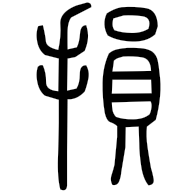 篆文 seal
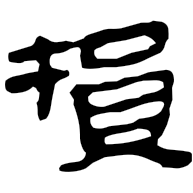 隸書 clerical · 西漢
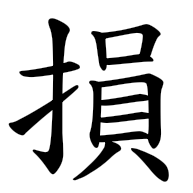 楷書 regular
Legge's note (1882)
Legge's title for the hexagram: diminishing, diminution.
XLI. The interpretation of this hexagram is encompassed with great difficulties. Sun is the symbol for the idea of diminishing or diminution; and what is said in Appendix I has made it to be accepted as teaching the duty of the subject to take of what is his and contribute to his ruler, or the expenses of the government under which he lives; in other words, readily and cheerfully to pay his taxes. P. Regis says, ‘Sun seu (vectigalis causa) minuere.... est valde utile;’ and Canon McClatchie in translating Appendix I has:—‘Diminishing (by taxation for instance).... is very lucky.’ Possibly, king Wăn may have seen in the figures the subject of taxation; but the symbolism of his son takes a much wider range. My own reading of the figure and Text comes near to the view of Khăng-ȝze, that ‘every diminution and repression of what we have in excess to bring it into accordance with right and reason is comprehended under Sun.’ Let there be sincerity in doing this, and it will lead to the happiest results. It will lead to great success in great things; and if the correction, or it may be a contribution towards it, appear to be very small, yet it will be accepted;—as in the most solemn religious service. This is substantially the view of the hexagram approved by the Khang-hsî editors. Line 1 is strong, and its correlate in 4 is weak. Its subject will wish to help the subject of 4; but will not leave anything of his own undone in doing so. Nor will he diminish of his own for the other without due deliberation. Line 2 is strong, and in the central place. But it is in the place of a weak line, and its subject should maintain his position without moving to help his correlate in 5. Maintaining his own firm correctness is the best way to help him. Paragraph 3 is to my mind full of obscurity. Kû Hsî, adopting the view in Appendix I, says that the lower trigram was originally Khien, three undivided lines, like ‘three men walking together,’ and that the third line, taken away and made to be the topmost line, or the third, in what was originally Khwăn, three divided lines, was ‘the putting away of one man;’ and that then the change of place by 3 and 6, while they continued their proper correlation, was, one going away, and finding his friend. I cannot lay hold of any thread of reason in this. Line 4 is weak, and in an even place; like an individual ailing and unable to perform his proper work. But the correlate in 1 is strong; and is made to hasten to its relief. The ‘joy’ of the line shows the desire of its subject to do his part in the work of the hexagram. Line 5 is the seat of the ruler, who is here humble, and welcomes the assistance of his correlate, the subject of 2. He is a ruler whom all his subjects of ability will rejoice to serve in every possible way; and the result will be great good fortune. Line 6 has been changed from a weak into a strong line from line 3; has received therefore the greatest increase, and will carry out the idea of the hexagram in the highest degree and style. But he can give increase to others without diminishing his own resources, and of course the benefit he will confer will be incalculable. Ministers will come to serve him; and not one from each clan merely, but many. Such is the substance of what is said on this last paragraph. I confess that I only discern the meaning darkly.
Sources
- Chinese text: 周易, 維基文庫, page (revision 10646704); the text is public domain, the site's edits CC BY-SA 4.0.
- English: James Legge, The Yî King, Sacred Books of the East vol. XVI, Oxford 1882 (public domain), where this hexagram is “Sun”.
- Glyph images: 小學堂 字形演變, Academia Sinica (CC0 1.0).
- Pinyin: Unihan (Unicode License v3) with this site's readings for the classical cases. English gloss, relations, the idiom glosses, the English of the chronicle passages and the plain reading: this site.