- The 64
- Hexagram 35
35 晉 Advance
坤 Earth below, 離 Fire above
The sun coming up over the earth: advance, the bright rising. The text's picture is a prince rewarded with many horses and received three times in one day.
Tap a line of the figure to see where it leads when it changes. Cast for a question of your own. New here? What the I Ching is, coming from tarot.
This site's reading
卦辭 康侯用錫馬蕃庶,晝日三接: the prince who brings peace is given horses in plenty and received three times in a day. Advance here is the advance of someone whose service is recognised, not a push.
彖 The commentary: 晉 is to advance; brightness comes out over the earth, compliant and clinging to the great light, the yielding advancing and rising. Hence the horses and the three audiences.
大象 Brightness over the earth: the noble person makes his own bright virtue shine (自昭明德). The sun does not ask permission to rise.
爻 The lines: advancing and checked, firm and good, without trust yet generous, no blame; advancing and sorrowing, firm and good, a great blessing from the royal grandmother; trusted by all, regret gone; advancing like a marmot, firm and in peril; regret gone, gain or loss not to be fretted over, going is good and nothing not advantageous; and at the top advancing with the horns, used only against one's own town, danger then good, no blame, firm and mean. The marmot (line 4) is the counterfeit: advancing by scurrying.
If your question is about
- A relationship
- Advance by being bright, not pushing; trusted by all (line 3) is the mark. The marmot (line 4) and the horns (line 6) go wrong.
- Work
- Recognition is the engine: service, then horses and audiences. Let your virtue show (the Image); do not fret the gains and losses (line 5).
- A decision
- Go; the sun is rising. Firm and good even if checked or sorrowing at first (lines 1 and 2).
- No line changing
- Advance as a state: the light kept rising. Shine; the text has no caution here but the marmot and the horns.
Written from the text above and checked against it by Lun (2026-10-24). It is a way of reading the hexagram, not a prediction.
The text, with Legge
Judgment 卦辭
晉:康侯用錫馬蕃庶,晝日三接。
In Ȝin we see a prince who secures the tranquillity (of the people) presented on that account with numerous horses (by the king), and three times in a day received at interviews. (Legge, 1882)
Commentary on the Judgment 彖
晉,進也。明出地上,順而麗乎大明,柔進而上行。是以康侯用錫馬蕃庶,晝日三接也。
The Image 大象
明出地上,晉;君子以自昭明德。
The six lines
Line 1 初六
晉如,摧如,貞吉。罔孚,裕无咎。
The first line, divided, shows one wishing to advance, and (at the same time) kept back. Let him be firm and correct, and there will be good fortune. If trust be not reposed in him, let him maintain a large and generous mind, and there will be no error. (Legge, 1882)
The Image 小象
晉如,摧如;獨行正也。裕无咎;未受命也。
Changing, this line leads to 21 噬嗑 Shì Kè.
Line 2 六二
晉如,愁如,貞吉。受茲介福,于其王母。
The second line, divided, shows its subject with the appearance of advancing, and yet of being sorrowful. If he be firm and correct, there will be good fortune. He will receive this great blessing from his grandmother. (Legge, 1882)
The Image 小象
受茲介福,以中正也。
Changing, this line leads to 64 未濟 Wèi Jì.
Line 3 六三
眾允,悔亡。
The third line, divided, shows its subject trusted by all (around him). All occasion for repentance will disappear. (Legge, 1882)
The Image 小象
眾允之志,上行也。
Changing, this line leads to 56 旅 Lǚ.
Line 4 九四
晉如鼫鼠,貞厲。
The fourth line, undivided, shows its subject with the appearance of advancing, but like a marmot. However firm and correct he may be, the position is one of peril. (Legge, 1882)
The Image 小象
鼫鼠貞厲,位不當也。
Changing, this line leads to 23 剝 Bō.
Line 5 六五
悔亡,矢得勿恤,往吉无不利。
The fifth line, divided, shows how all occasion for repentance disappears (from its subject). (But) let him not concern himself about whether he shall fail or succeed. To advance will be fortunate, and in every way advantageous. (Legge, 1882)
The Image 小象
失得勿恤,往有慶也。
Changing, this line leads to 12 否 Pǐ.
Line 6 上九
晉其角,維用伐邑,厲吉无咎,貞吝。
The topmost line, undivided, shows one advancing his horns. But he only uses them to punish the (rebellious people of his own) city. The position is perilous, but there will be good fortune. (Yet) however firm and correct he may be, there will be occasion for regret. (Legge, 1882)
The Image 小象
維用伐邑,道未光也。
Changing, this line leads to 16 豫 Yù.
Related hexagrams
Where the name comes from
晉
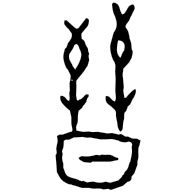 甲骨文 oracle bone · 商
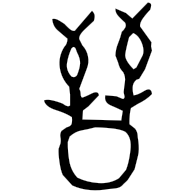 金文 bronze · 西周中期
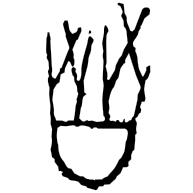 戰國文字 Warring States · 戰國.晉
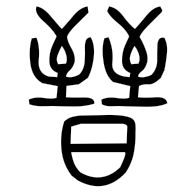 篆文 seal
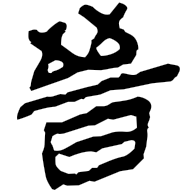 隸書 clerical · 西漢
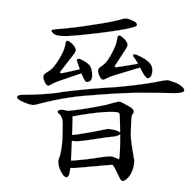 楷書 regular
Legge's note (1882)
Legge's title for the hexagram: to advance.
XXXV. The Thwan of this hexagram expresses its subject more fully and plainly than that of any of the previous thirty-four. It is about a feudal prince whose services to the country have made him acceptable to his king. The king’s favour has been shown to him by gifts and personal attentions such as form the theme of more than one ode in the Shih; see especially III, iii, 7. The symbolism of the lines dimly indicates the qualities of such a prince. Ȝin means ‘to advance.’ Hexagrams 46 and 53 agree with this in being called by names that indicate progress and advance. The advance in Ȝin is like that of the sun, ‘the shining light, shining more and more to the perfect day.’ Line 1 is weak, and in the lowest place, and its correlate in 4 is neither central nor in its correct position. This indicates the small and obstructed beginnings of his subject. But by his firm correctness he pursues the way to good fortune; and though the king does not yet believe in him, he the more pursues his noble course. Line 2 is weak, and its correlate in 5 is also weak. Its subject therefore has still to mourn in obscurity. But his position is central and correct, and he holds on his way, till success comes ere long. The symbolism says he receives it ‘from his grandmother;’ and readers will be startled by the extraordinary statement, as I was when I first read it. Literally the Text says ‘the king’s mother,’ as P. Regis rendered it, —‘Istam magnam felicitatem a matre regis recipit.’ He also tries to give the name a historical reference;—to Thâi-Kiang, the grandmother of king Wăn; Thâi-Zăn, his mother; or to Thâi-sze, his wife, and the mother of king Wû and the duke of Kâu, all famous in Chinese history, and celebrated in the Shih. But ‘king’s father’ and ‘king’s mother’ are well-known Chinese appellations for ‘grandfather’ and ‘grandmother.’ This is the view given on the passage, by Khăng-ȝze, Kû Hsî, and the Khang-hsî editors, the latter of whom, indeed, account for the use of the name, instead of ‘deceased mother,’ which we find in hexagram 62, by the regulations observed in the ancestral temple. These authorities, moreover, all agree in saying that the name points us to line 5, the correlate of 2, and ‘the lord of the hexagram.’ Now the subject of line 5 is the sovereign, who at length acknowledges the worth of the feudal lord, and gives him the great blessing. The ‘New Digest of Comments on the Yî (1686),’ in its paraphrase of the line, has, ‘He receives at last this great blessing from the mild and compliant ruler.’ I am not sure that ‘motherly king’ would not be the best and fairest translation of the phrase. Canon McClatchie has a very astonishing note on the name, which he renders ‘Imperial Mother’ (p. 164):—‘That is, the wife of Imperial Heaven (Juno), who occupies the “ throne of the diagram,” viz. the fifth stroke, which is soft and therefore feminine. She is the Great Ancestress of the human race. See Imp. Ed. vol. iv, Sect. v, p. 25, Com.’ Why such additions to the written word? Line 3 is weak, and in an odd place; but the subjects of 1 and 2 are possessed by the same desire to advance as the subject of this. A common trust and aim possess them; and hence the not unfavourable auspice. Line 4 is strong, but it is in an even place, nor is it central. It suggests the idea of a marmot (? or rat), stealthily advancing. Nothing could be more opposed to the ideal of the feudal lord in the hexagram. In line 5 that lord and his intelligent sovereign meet happily. He holds on his right course, indifferent as to results, but things are so ordered that he is, and will continue to be, crowned with success. Line 6 is strong, and suggests the idea of its subject to the last continuing his advance, and that not only with firm correctness, but with strong force. The ‘horns’ are an emblem of threatening strength, and though he uses them only in his own state, and against the rebellious there, that such a prince should have any occasion to use force is matter for regret.
Sources
- Chinese text: 周易, 維基文庫, page (revision 10646579); the text is public domain, the site's edits CC BY-SA 4.0.
- English: James Legge, The Yî King, Sacred Books of the East vol. XVI, Oxford 1882 (public domain), where this hexagram is “Ȝin”.
- Glyph images: 小學堂 字形演變, Academia Sinica (CC0 1.0).
- Pinyin: Unihan (Unicode License v3) with this site's readings for the classical cases. English gloss, relations, the idiom glosses, the English of the chronicle passages and the plain reading: this site.