- The 64
- Hexagram 64
64 未濟 Not Yet Across
坎 Water below, 離 Fire above
Fire over water, every line out of its place: not yet across. The text says it gets through, and warns of the young fox that almost crossed and wet its tail; the book ends on the crossing still to be made.
Tap a line of the figure to see where it leads when it changes. Cast for a question of your own. New here? What the I Ching is, coming from tarot.
This site's reading
卦辭 亨。小狐汔濟,濡其尾,无攸利: it gets through; the little fox nearly across gets its tail wet; nothing advantageous. Each yang line sits in an even place, each yin in an odd: disorder, and therefore everything still possible.
彖 The commentary: it gets through because the yielding is central. The little fox nearly across has not yet left the middle; wetting its tail, nothing advantageous, because it does not carry through to the end. Though the places are wrong, firm and yielding answer each other.
大象 Fire above water: the noble person carefully distinguishes things and gives each its place. Before the crossing, sort.
爻 The lines: the tail wet, regret; the wheel dragged, firm and good; not yet across, going is evil, yet advantageous to cross the great stream; firm and good, regret gone, the shock used to attack the demon land, three years and reward from the great state; firm and good, no regret, the noble person's light, sincerity, good; and at the top sincerity in drinking wine, no blame, but wetting the head, sincerity lost. The pair of Already Across, read in the other direction: unfinished, and the better for it.
If your question is about
- A relationship
- Not yet across, the places not yet right; the fox's wet tail is impatience. Hold the wheel (line 2); the light comes at line 5.
- Work
- Sort things and give each its place (the Image) before the crossing. Line 3's paradox, going is evil yet cross, means not alone, not yet.
- A decision
- Not yet; the fox nearly made it and did not carry through. Drag the wheel, keep firm, and the three years are rewarded (line 4).
- No line changing
- The unfinished as a state, and the book's last word. Keep sorting, keep the head dry, keep the sincerity line 6 loses in the wine.
Written from the text above and checked against it by Lun (2026-10-24). It is a way of reading the hexagram, not a prediction.
The text, with Legge
Judgment 卦辭
未濟:亨。小狐汔濟,濡其尾,无攸利。
Wei Ȝî intimates progress and success (in the circumstances which it implies). (We see) a young fox that has nearly crossed (the stream), when its tail gets immersed. There will be no advantage in any way. (Legge, 1882)
Commentary on the Judgment 彖
未濟,亨;柔得中也。小狐汔濟,未出中也。濡其尾,无攸利;不續終也。雖不當位,剛柔應也。
The Image 大象
火在水上,未濟;君子以慎辨物居方。
The six lines
Line 1 初六
濡其尾,吝。
The first line, divided, shows its subject (like a fox) whose tail gets immersed. There will be occasion for regret. (Legge, 1882)
The Image 小象
濡其尾,亦不知極也。
Changing, this line leads to 38 睽 Kuí.
Line 2 九二
曳其輪,貞吉。
The second line, undivided, shows its subject dragging back his (carriage-)wheel. With firmness and correctness there will be good fortune. (Legge, 1882)
The Image 小象
九二貞吉,中以行正也。
Changing, this line leads to 35 晉 Jìn.
Line 3 六三
未濟,征凶,利涉大川。
The third line, divided, shows its subject, with (the state of things) not yet remedied, advancing on; which will lead to evil. But there will be advantage in (trying to) cross the great stream. (Legge, 1882)
The Image 小象
未濟征凶,位不當也。
Changing, this line leads to 50 鼎 Dǐng.
Line 4 九四
貞吉,悔亡,震用伐鬼方,三年有賞于大國。
The fourth line, undivided, shows its subject by firm correctness obtaining good fortune, so that all occasion for repentance disappears. Let him stir himself up, as if he were invading the Demon region, where for three years rewards will come to him (and his troops) from the great kingdom. (Legge, 1882)
The Image 小象
貞吉悔亡,志行也。
Changing, this line leads to 4 蒙 Méng.
Line 5 六五
貞吉,无悔,君子之光,有孚,吉。
The fifth line, divided, shows its subject by firm correctness obtaining good fortune, and having no occasion for repentance. (We see in him) the brightness of a superior man, and the possession of sincerity. There will be good fortune. (Legge, 1882)
The Image 小象
君子之光,其暉吉也。
Changing, this line leads to 6 訟 Sòng.
Line 6 上九
有孚于飲酒,无咎,濡其首,有孚失是。
The topmost line, undivided, shows its subject full of confidence and therefore feasting (quietly). There will be no error. (If he) cherish this confidence, till he (is like the fox who) gets his head immersed, it will fail of what is right. (Legge, 1882)
The Image 小象
飲酒濡首,亦不知節也。
Changing, this line leads to 40 解 Xiè.
Related hexagrams
Where the name comes from
未
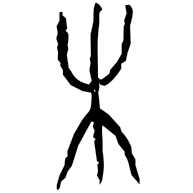 甲骨文 oracle bone · 商
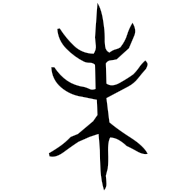 金文 bronze · 西周早期
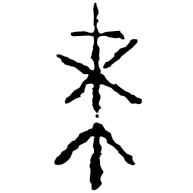 戰國文字 Warring States · 戰國.晉
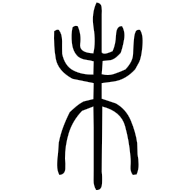 篆文 seal
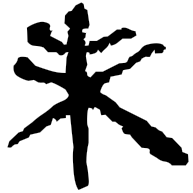 隸書 clerical · 秦
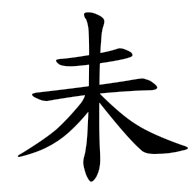 楷書 regular
濟
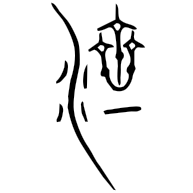 金文 bronze · 戰國晚期.晉
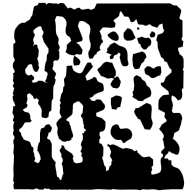 戰國文字 Warring States · 春秋晚期或戰國早期.秦
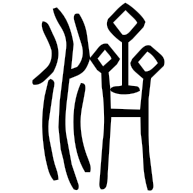 篆文 seal
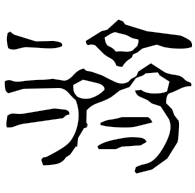 隸書 clerical · 西漢
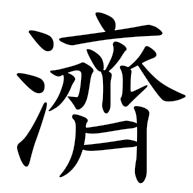 楷書 regular
Legge's note (1882)
Legge's title for the hexagram: not yet completed.
LXIV. Wei Ȝî is the reverse of Kî Ȝî. The name tells us that the successful accomplishment of whatever the writer had in his mind had not yet been realised. The vessel of the state has not been brought across the great and dangerous stream. Some have wished that the Yî might have concluded with Kî Ȝî, and the last hexagram have left us with the picture of human affairs all brought to good order. But this would not have been in harmony with the idea of the Yî, as the book of change. Again and again it has been pointed out that we find in it no idea of a perfect and abiding state. Just as the seasons of the year change and pursue an ever-recurring round, so is it with the phases of society. The reign of order has been, and has terminated; and this hexagram calls us to see the struggle for its realisation recommenced. It treats of how those engaged in that struggle should conduct themselves with a view to secure the happy consummation. How the figure sets forth the state of things by its constituent trigrams will appear in Appendix II. A similar indication is supposed to be given by the lines, not one of which is in the correct place; the strong lines being all in even places, and the weak lines in odd. At the same time each of them has a proper correlate; and so the figure gives an intimation of some successful progress. See also Appendix I. The symbolism of the young fox suggests a want of caution on the part of those, in the time and condition denoted by the hexagram, who try to remedy prevailing disorders. Their attempt is not successful, and they get themselves into trouble and danger. Whatever can be done must be undertaken in another way. I suppose a fox to be intended by the symbolism of line 1, bringing that animal on from the Thwan. Some of the commentators understand it of any animal. The line is weak, at the bottom of the trigram of peril, and responds to the strong 4, which is not in its correct place. Its subject attempts to be doing, but finds cause to regret his course. The subject of line 2, strong, and in the centre, is able to repress himself, and keep back his carriage from advancing; and there is good fortune. The Khang-hsî editors say that it is very difficult to understand what is said under line 3; and many critics suppose that a negative has dropt out, and that we should really read that ‘it will not be advantageous to try and cross the great stream.’ Line 4, though strong, is in an even place; and this might vitiate the endeavours of its subject to bring about a better state of things. But he is firm and correct. He is in the fourth place moreover, and immediately above there is his ruler, represented by a weak line, humble therefore, and prepared to welcome his endeavours. Let him exert himself vigorously and long, as Kâo Ȝung did in his famous expedition (see last hexagram, line 3), and he will make progress and have success. Expeditions beyond the frontiers in those days were not very remote. Intercourse was kept up between the army and the court. Rewards, distinctions, and whatever was necessary to encourage the army, were often sent to it. Line 5 is weak, in an odd place. But its subject is the ruler, humble and supported by the subject of the strong 2; and hence the auspice is very good. The subject of line 6, when the work of the hexagram has been done, appears disposed to remain quiet in the confidence of his own power, but enjoying himself; and thereby he will do right. If, on the contrary, he will go on to exert his powers, and play with the peril of the situation, the issue will be bad.
Sources
- Chinese text: 周易, 維基文庫, page (revision 10647450); the text is public domain, the site's edits CC BY-SA 4.0.
- English: James Legge, The Yî King, Sacred Books of the East vol. XVI, Oxford 1882 (public domain), where this hexagram is “Wei Ȝî”.
- Glyph images: 小學堂 字形演變, Academia Sinica (CC0 1.0).
- Pinyin: Unihan (Unicode License v3) with this site's readings for the classical cases. English gloss, relations, the idiom glosses, the English of the chronicle passages and the plain reading: this site.