- The 64
- Hexagram 62
62 小過 Small Excess
艮 Mountain below, 震 Thunder above
Thunder on the mountain, and the figure a bird with wings spread: small excess, going a little beyond in small things. The text says small matters are possible and great ones are not, and that the flying bird's cry says: not up, but down.
Tap a line of the figure to see where it leads when it changes. Cast for a question of your own. New here? What the I Ching is, coming from tarot.
This site's reading
卦辭 亨。利貞。可小事,不可大事。飛鳥遺之音,不宜上宜下,大吉: it gets through; firmness advantageous; small things, not great things. The flying bird leaves its cry: not up, down, greatly good. Excess in small things, downward, is the whole counsel.
彖 The commentary: the small exceeds and gets through; exceeding with firmness goes with the time. The yielding is central, so small things are good; the firm has lost its place and is not central, so great things cannot be done. The bird's cry: going up is against the grain, going down is with it.
大象 Thunder on the mountain: the noble person in conduct exceeds in respect, in mourning exceeds in grief, in spending exceeds in thrift. A little too much, in the right direction.
爻 The lines: the flying bird, evil; passing the grandfather and meeting the grandmother, not reaching the lord but meeting the minister, no blame; not exceeding in guarding, and someone attacks, evil; no blame, meeting without exceeding, going is dangerous, be warned; dense clouds and no rain from the western outskirts, the duke shoots the one in the cave; and at the top not meeting but exceeding, the flying bird caught, evil, disaster. Downward and modest (line 2) is right; upward and flying (lines 1 and 6) is wrong.
If your question is about
- A relationship
- A little more respect and care than usual is right (the Image); flying high (lines 1, 6) is the fault. Meet the grandmother.
- Work
- Small matters only, and a little beyond in thrift and care. Guard more than seems needed (line 3).
- A decision
- Small steps, downward, with firmness; nothing great now. The bird says down.
- No line changing
- Small excess as a state: modest overdoing that holds. Keep it low and small; the clouds (line 5) are still not raining.
Written from the text above and checked against it by Lun (2026-10-24). It is a way of reading the hexagram, not a prediction.
The text, with Legge
Judgment 卦辭
小過:亨。利貞。可小事,不可大事。飛鳥遺之音,不宜上宜下,大吉。
Hsiâo Kwo indicates that (in the circumstances which it implies) there will be progress and attainment. But it will be advantageous to be firm and correct. (What the name denotes) may be done in small affairs, but not in great affairs. (It is like) the notes that come down from a bird on the wing;—to descend is better than to ascend. There will (in this way) be great good fortune. (Legge, 1882)
Commentary on the Judgment 彖
小過,小者過而亨也。過以利貞,與時行也。柔得中,是以小事吉也。剛失位而不中,是以不可大事也。有飛鳥之象焉,有飛鳥遺之音,不宜上宜下,大吉;上逆而下順也。
The Image 大象
山上有雷,小過;君子以行過乎恭,喪過乎哀,用過乎儉。
The six lines
Line 1 初六
飛鳥以凶。
The first line, divided, suggests (the idea of) a bird flying, (and ascending) till the issue is evil. (Legge, 1882)
The Image 小象
飛鳥以凶,不可如何也。
Changing, this line leads to 55 豐 Fēng.
Line 2 六二
過其祖,遇其妣;不及其君,遇其臣;无咎。
The second line, divided, shows its subject passing by his grandfather, and meeting with his grandmother; not attempting anything against his ruler, but meeting him as his minister. There will be no error. (Legge, 1882)
The Image 小象
不及其君,臣不可過也。
Changing, this line leads to 32 恒 Héng.
Line 3 九三
弗過防之,從或戕之,凶。
The third line, undivided, shows its subject taking no extraordinary precautions against danger; and some in consequence finding opportunity to assail and injure him. There will be evil. (Legge, 1882)
The Image 小象
從或戕之,凶如何也。
Changing, this line leads to 16 豫 Yù.
Line 4 九四
无咎,弗過遇之。往厲必戒,勿用永貞。
The fourth line, undivided, shows its subject falling into no error, but meeting (the exigency of his situation), without exceeding (in his natural course). If he go forward, there will be peril, and he must be cautious. There is no occasion to be using firmness perpetually. (Legge, 1882)
The Image 小象
弗過遇之,位不當也。往厲必戒,終不可長也。
Changing, this line leads to 15 謙 Qiān.
Line 5 六五
密雲不雨,自我西郊,公弋取彼在穴。
The fifth line, divided, (suggests the idea) of dense clouds, but no rain, coming from our borders in the west. It also (shows) the prince shooting his arrow, and taking the bird in a cave. (Legge, 1882)
The Image 小象
密云不雨,已上也。
Changing, this line leads to 31 咸 Xián.
Line 6 上六
弗遇過之,飛鳥離之,凶,是謂災眚。
The sixth line, divided, shows its subject not meeting (the exigency of his situation), and exceeding (his proper course). (It suggests the idea of) a bird flying far aloft. There will be evil. The case is what is called one of calamity and self-produced injury. (Legge, 1882)
The Image 小象
弗遇過之,已亢也。
Changing, this line leads to 56 旅 Lǚ.
Related hexagrams
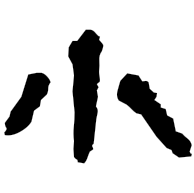
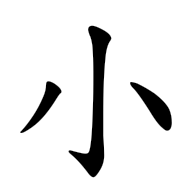
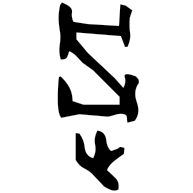
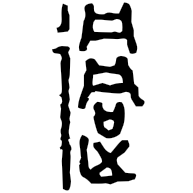
Where the name comes from
小
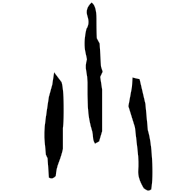 甲骨文 oracle bone · 商
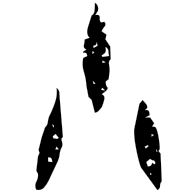 金文 bronze · 西周早期
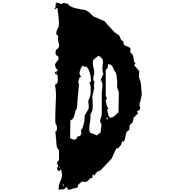 戰國文字 Warring States · 戰國.秦
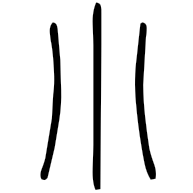 篆文 seal
 隸書 clerical · 秦
 楷書 regular
過
 金文 bronze · 西周早期
 戰國文字 Warring States · 戰國.晉
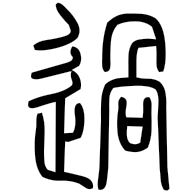 篆文 seal
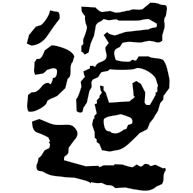 隸書 clerical · 秦
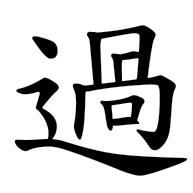 楷書 regular
Legge's note (1882)
Legge's title for the hexagram: small excesses.
LXII. The name Hsiâo Kwo is explained both by reference to the lines of the hexagram, and to the meaning of the characters. The explanation from the lines appears immediately on comparing them with those of Tâ Kwo, the 28th hexagram. There the first and sixth lines are divided, and between are four undivided lines; here the third and fourth lines are undivided, and outside each of them are two divided lines. The undivided or yang lines are great, the divided or yin lines are called small. In Hsiâo Kwo the divided or small lines predominate. But this peculiar structure of the figure could be of no interest to the student, if it were not for the meaning of the name, which is ‘small excesses’ or ‘exceeding in what is small.’ The author, accepted by us as king Wăn, had in his mind our distinction of essentials and non-essentials. Is it ever good to deviate from what is recognised as the established course of procedure? The reply is—never in the matter of right; but in what is conventional and ceremonial—in what is non-essential—the deviation may be made, and will be productive of good. The form may be given up, but not the substance. But the thing must be done very carefully—humbly and reverently, and in small matters. The symbolism of the bird is rather obscure. The whole of it is intended to teach humility. It is better for the bird to descend, keeping near to where it can perch and rest, than to hold on ascending into the homeless regions of the air. Line 1 is weak, in an odd place, and possessed by the ‘idea of exceeding,’ which belongs to the hexagram. Its correlate is the strong 4, belonging to the trigram Kăn, the attribute of which is movement. There is nothing to repress the tendency of 1; rather it is stimulated; and hence the symbolism. Line 2 is weak, but in its proper place, and in the centre. Its correlate is 5, which is also a weak line. The lines 3 and 4 between them are both strong; and are supposed to represent the father and grandfather of the subject of 2; but he or she goes past them, and meets with the grandmother in 5. Again, 5 is the ruler’s seat. The subject of 2 moves on to him, but not as an enemy; but humbly and loyally, as his minister according to the attributes of a weak line in the central place. It must be allowed that this view of the symbolism and its interpretation is obscure and strained. The subject of line 3 is too confident in his own strength, and too defiant of the weak and small enemies that seek his hurt. Line 4 is also strong, but the exercise of his strength by its subject is tempered by the position in an even place. He is warned, however, to continue quiet and restrain himself. Line 5, though in the ruler’s seat, is weak, and incapable of doing anything great. Its subject is called king or duke because of the ruler’s seat; and the one whom in the concluding sentence he is said to capture is supposed to be the subject of 2. The first part of the symbolism is the same as that of the Thwan under hexagram 9, q.v. I said there that it probably gave a testimony of the merit of the house of Kâu, as deserving the throne rather than the kings of Shang. That was because the Thwan contained the sentiments of Wăn, while he was yet only lord of Kâu. But the symbolism here was the work of the duke of Kâu, after his brother king Wû had obtained the throne. How did the symbolism then occur to him? May we not conclude that at least the hsiang of this hexagram was written during the troubled period of his regency, after the accession of Wû’s son, king Khăng? The Khang-hsî editors find in the concluding symbolism an incentive to humility:—‘The duke, leaving birds on the wing, is content to use his arrows against those in a cave.’ Line 6 is weak, and is at the top of the trigram of movement. He is possessed by the idea of the hexagram in an extreme degree, and is incapable of keeping himself under restraint.
Sources
- Chinese text: 周易, 維基文庫, page (revision 10643238); the text is public domain, the site's edits CC BY-SA 4.0.
- English: James Legge, The Yî King, Sacred Books of the East vol. XVI, Oxford 1882 (public domain), where this hexagram is “Hsiâo Kwo”.
- Glyph images: 小學堂 字形演變, Academia Sinica (CC0 1.0).
- Pinyin: Unihan (Unicode License v3) with this site's readings for the classical cases. English gloss, relations, the idiom glosses, the English of the chronicle passages and the plain reading: this site.