- The 64
- Hexagram 28
28 大過 Great Excess
巽 Wind below, 兌 Lake above
Four strong lines between two weak ends: great excess, a ridgepole bending. The text says there is advantage in going somewhere and it gets through; the weight is real and the way out is to move.
Tap a line of the figure to see where it leads when it changes. Cast for a question of your own. New here? What the I Ching is, coming from tarot.
This site's reading
卦辭 棟橈,利有攸往,亨: the ridgepole sags; advantageous to have somewhere to go; it gets through. The beam is too heavy in the middle and too weak at the ends; the counsel is not to stand under it.
彖 The commentary: the great is in excess; the ridgepole sags because the base and the tip are weak. The firm is excessive yet central; gentle and pleased in acting; advantageous to go, and so it gets through. "Great is the time of great excess" (大過之時大矣哉).
大象 The lake drowns the tree: the noble person stands alone without fear and withdraws from the world without gloom. The counsel for an extraordinary time is an extraordinary steadiness.
爻 The lines: white rushes spread beneath the offering, no blame; a withered poplar sprouting, an old man taking a young wife, nothing not advantageous; the ridgepole sags, evil; the ridgepole arches, good, but other things bring regret; a withered poplar flowering, an old woman taking a young husband, no blame and no praise; and at the top wading in over the head, evil, no blame. The care at the bottom and the daring at the top frame the sagging beam.
If your question is about
- A relationship
- An uneven match can still bear fruit (line 2's sprout) or only flower (line 5); the beam breaks at line 3. Lay the rushes first.
- Work
- Too much weight in the middle. Move rather than hold it up; the time is extraordinary and so should the response be.
- A decision
- Go; the Judgment says advantage in having somewhere to go. Stand alone without fear if you must (the Image).
- No line changing
- Excess that holds: the beam keeps bending. Take weight off the middle, strengthen the ends, and keep your own steadiness.
Written from the text above and checked against it by Lun (2026-10-24). It is a way of reading the hexagram, not a prediction.
The text, with Legge
Judgment 卦辭
大過:棟橈,利有攸往,亨。
Tâ Kwo suggests to us a beam that is weak. There will be advantage in moving (under its conditions) in any direction whatever; there will be success. (Legge, 1882)
Commentary on the Judgment 彖
大過,大者過也。棟橈,本末弱也。剛過而中,巽而說行,利有攸往,乃亨。大過之時大矣哉!
The Image 大象
澤滅木,大過。君子以獨立不懼,遯世无悶。
The six lines
Line 1 初六
藉用白茅,无咎。
The first line, divided, shows one placing mats of the white mâo grass under things set on the ground. There will be no error. (Legge, 1882)
The Image 小象
藉用白茅,柔在下也。
Changing, this line leads to 43 夬 Guài.
Line 2 九二
枯楊生稊,老夫得其女妻,无不利。
The second line, undivided, shows a decayed willow producing shoots, or an old husband in possession of his young wife. There will be advantage in every way. (Legge, 1882)
The Image 小象
老夫女妻,過以相與也。
Changing, this line leads to 31 咸 Xián.
Line 3 九三
棟橈,凶。
The third line, undivided, shows a beam that is weak. There will be evil. (Legge, 1882)
The Image 小象
棟橈之凶,不可以有輔也。
Changing, this line leads to 47 困 Kùn.
Line 4 九四
棟隆,吉。有它吝。
The fourth line, undivided, shows a beam curving upwards. There will be good fortune. If (the subject of it) looks for other (help but that of line one), there will be cause for regret. (Legge, 1882)
The Image 小象
棟隆之吉,不橈乎下也。
Changing, this line leads to 48 井 Jǐng.
Line 5 九五
枯楊生華,老婦得其士夫,无咎无譽。
The fifth line, undivided, shows a decayed willow producing flowers, or an old wife in possession of her young husband. There will be occasion neither for blame nor for praise. (Legge, 1882)
The Image 小象
枯楊生華,何可久也。老婦士夫,亦可醜也。
Changing, this line leads to 32 恒 Héng.
Line 6 上六
過涉滅頂,凶,无咎。
The topmost line, divided, shows its subject with extraordinary (boldness) wading through a stream, till the water hides the crown of his head. There will be evil, but no ground for blame. (Legge, 1882)
The Image 小象
過涉之凶,不可咎也。
Changing, this line leads to 44 姤 Gòu.
In history
The 左傳 and 國語, the chronicles of the sixth to fifth centuries BC, record real casts of the Changes and what came of them. One of them gave this hexagram.
548 BC: 崔杼 (崔武子), minister of 齊, on marrying the widow 棠姜
Asked: May I take this woman as my wife? The stalks gave 47 困 with line 3 changing, to 28 大過.
夫從風.風隕妻.不可聚也.且其繇曰.困于石.據于蒺梨.入于其宮.不見其妻.凶.The court scribes all called it lucky. 陳文子 did not: the husband follows the wind and the wind throws the wife down, so she should not be taken. He read the third line of 困, stuck against a rock, leaning on thorns, going into the house and not finding the wife, as misfortune with no way home.
崔杼 married her anyway. 齊莊公 took up with her, and in 548 BC 崔杼 had the duke killed. In 546 BC his sons fought over the succession, his house was destroyed, his wife hanged herself and so did he.
左傳 襄公二十五年, 維基文庫 (revision 2179112). The line text 困于石 matches the received 困 六三 (the page writes 蒺梨 for the received 蒺蔾). The 襄公 page transcludes this year from a subpage; the URL is that subpage.
The chronicles' diviners read from oracle texts of their own time; where their words match our clause text the note says so, and where they do not, it says that. None of this is a claim that the text foretold the event.
Related hexagrams
Where the name comes from
大
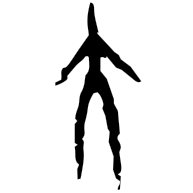 甲骨文 oracle bone · 商
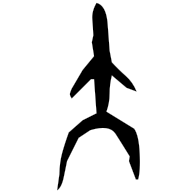 金文 bronze · 西周早期
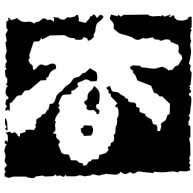 戰國文字 Warring States · 戰國.齊
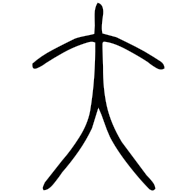 篆文 seal
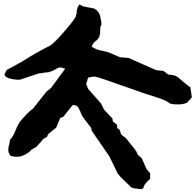 隸書 clerical · 秦
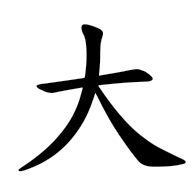 楷書 regular
過
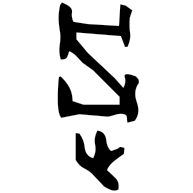 金文 bronze · 西周早期
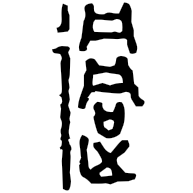 戰國文字 Warring States · 戰國.晉
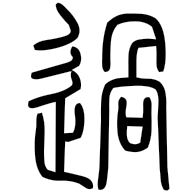 篆文 seal
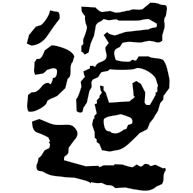 隸書 clerical · 秦
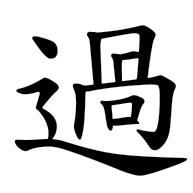 楷書 regular
Legge's note (1882)
Legge's title for the hexagram: .
XXVIII. Very extraordinary times require very extraordinary gifts in the conduct of affairs in them. This is the text on which king Wăn and his son discourse after their fashion in this hexagram. What goes, in their view, to constitute anything extraordinary is its greatness and difficulty. There need not be about it what is not right. Looking at the figure we see two weak lines at the top and bottom, and four strong lines between them, giving us the idea of a great beam unable to sustain its own weight. But the second and fifth lines are both strong and in the centre; and from this and the attributes of the component trigrams a good auspice is obtained. Line 1 being weak, and at the bottom of the figure, and of the trigram Sun, which denotes flexibility and humility, its subject is distinguished by his carefulness, as in the matter mentioned; and there is a good auspice. Line 2 has no proper correlate above. Hence he inclines to the weak 1 below him; and we have the symbolism of the line. An old husband with a young wife will yet have children; the action of the subject of 2 will be successful. Line 3 is strong, and in an odd place. Its subject is confident in his own strength, but his correlate in 6 is weak. Alone, he is unequal to the extraordinary strain on him, and has for his symbol the weak beam. Line 4 is near 5, the ruler’s place. On its subject devolves the duty of meeting the extraordinary exigency of the time; but he is strong; and, the line being in an even place, his strength is tempered. He will be equal to his task. Should he look out for the help of the subject of 1, that would affect him with another element of weakness; and his action would give cause for regret. Line 5 is strong and central. Its subject should be equal to achieve extraordinary merit. But he has no proper correlate below, and as 2 inclined to 1, so does this to 6. But here the willow only produces flowers, not shoots;—its decay will soon reappear. An old wife will have no children. If the subject of the line is not to be condemned as that of 3, his action does not deserve praise. The subject of 6 pursues his daring course, with a view to satisfy the extraordinary exigency of the time, and benefit all under the sky. He is unequal to the task, and sinks beneath it; but his motive modifies the judgment on his conduct.
Sources
- Chinese text: 周易, 維基文庫, page (revision 10645184); the text is public domain, the site's edits CC BY-SA 4.0.
- English: James Legge, The Yî King, Sacred Books of the East vol. XVI, Oxford 1882 (public domain), where this hexagram is “Tâ Kwo”.
- Glyph images: 小學堂 字形演變, Academia Sinica (CC0 1.0).
- Pinyin: Unihan (Unicode License v3) with this site's readings for the classical cases. English gloss, relations, the idiom glosses, the English of the chronicle passages and the plain reading: this site.