- The 64
- Hexagram 46
46 升 Rising
巽 Wind below, 坤 Earth above
Wood growing up through the earth: rising, step by step. The text says it gets through greatly, that the great person should be sought without anxiety, and that going south is good.
Tap a line of the figure to see where it leads when it changes. Cast for a question of your own. New here? What the I Ching is, coming from tarot.
This site's reading
卦辭 元亨,用見大人,勿恤,南征吉: great, penetrating; use it to see the great person, do not worry; a march south is good. The rising here is gradual and welcomed, not a leap.
彖 The commentary: the yielding rises with the time; gentle and compliant, firm in the centre and answered, hence great success. Seeing the great person without anxiety: there is celebration. Going south is good: the will goes forward.
大象 Wood growing in the earth: the noble person follows virtue and piles up the small to become high and great (積小以高大). Rising is accumulation.
爻 The lines: rising welcomed, greatly good; sincerity makes a small offering fitting, no blame; rising into an empty city; the king sacrifices on Mount Qi, good, no blame; firm and good, rising the stairs; and at the top rising in the dark, advantageous only as unceasing firmness. The sixth line is the one who keeps climbing after the climb is done.
If your question is about
- A relationship
- Rising together by small steps, welcomed from above (line 1). Climbing in the dark (line 6) is the warning: know when the stairs end.
- Work
- Pile up the small to become great (the Image); go south, meet the great person without worry. The empty city (line 3) is no home.
- A decision
- Go, gradually; this is the hexagram of promotion by accumulation. Climb the stairs (line 5), not the dark (line 6).
- No line changing
- Rising as a state: the tree keeps growing. Keep adding the small; the only danger is not noticing the top.
Written from the text above and checked against it by Lun (2026-10-24). It is a way of reading the hexagram, not a prediction.
The text, with Legge
Judgment 卦辭
升:元亨,用見大人,勿恤,南征吉。
Shăng indicates that (under its conditions) there will be great progress and success. Seeking by (the qualities implied in it) to meet with the great man, its subject need have no anxiety. Advance to the south will be fortunate. (Legge, 1882)
Commentary on the Judgment 彖
柔以時升,巽而順,剛中而應,是以大亨。用見大人,勿恤;有慶也。南征吉,志行也。
The Image 大象
地中生木,升;君子以順德,積小以高大。
The six lines
Line 1 初六
允升,大吉。
The first line, divided, shows its subject advancing upwards with the welcome (of those above him). There will be great good fortune. (Legge, 1882)
The Image 小象
允升大吉,上合志也。
Changing, this line leads to 11 泰 Tài.
Line 2 九二
孚乃利用禴,无咎。
The second line, undivided, shows its subject with that sincerity which will make even the (small) offerings of the vernal sacrifice acceptable. There will be no error. (Legge, 1882)
The Image 小象
九二之孚,有喜也。
Changing, this line leads to 15 謙 Qiān.
Line 3 九三
升虛邑。
The third line, undivided, shows its subject ascending upwards (as into) an empty city. (Legge, 1882)
The Image 小象
升虛邑,无所疑也。
Changing, this line leads to 7 師 Shī.
Line 4 六四
王用享于岐山,吉无咎。
The fourth line, divided, shows its subject employed by the king to present his offerings on mount Khî. There will be good fortune; there will be no mistake. (Legge, 1882)
The Image 小象
王用亨于岐山,順事也。
Changing, this line leads to 32 恒 Héng.
Line 5 六五
貞吉,升階。
The fifth line, divided, shows its subject firmly correct, and therefore enjoying good fortune. He ascends the stairs (with all due ceremony). (Legge, 1882)
The Image 小象
貞吉升階,大得志也。
Changing, this line leads to 48 井 Jǐng.
Line 6 上六
冥升,利于不息之貞。
The sixth line, divided, shows its subject advancing upwards blindly. Advantage will be found in a ceaseless maintenance of firm correctness. (Legge, 1882)
The Image 小象
冥升在上,消不富也。
Changing, this line leads to 18 蠱 Gǔ.
Related hexagrams
Where the name comes from
升
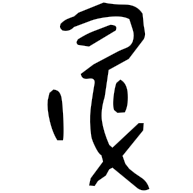 甲骨文 oracle bone · 商
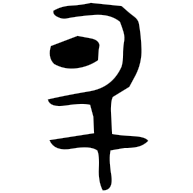 金文 bronze · 西周中期
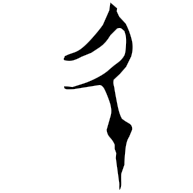 戰國文字 Warring States · 戰國.楚
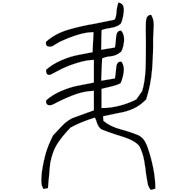 篆文 seal
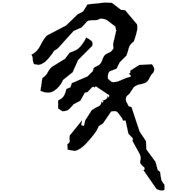 隸書 clerical · 秦
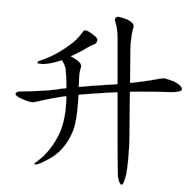 楷書 regular
Legge's note (1882)
Legge's title for the hexagram: advancing and ascending.
XLVI. The character Shăng is used of advancing in an upward direction, ‘advancing and ascending.’ And here, as the name of the hexagram, it denotes the advance of a good officer to the highest pinnacle of distinction. The second line, in the centre of the lower trigram, is strong, but the strength is tempered by its being in an even place. As the representative of the subject of the hexagram, it shows him to be possessed of modesty and force. Then the ruler’s seat, the fifth place, is occupied by a divided line, indicating that he will welcome the advance of 2. The officer therefore both has the qualities that fit him to advance, and a favourable opportunity to do so. The result of his advance will be fortunate. It is said that after he has met with the ruler, ‘the great man’ in 5, ‘advance to the south will be fortunate.’ Kû Hsî and other critics say that ‘advancing to the south’ is equivalent simply to ‘advancing forwards.’ The south is the region of brightness and warmth; advance towards it will be a joyful progress. As P. Regis explains the phrase, the traveller will proceed ‘via recta simillima illi qua itur ad austrates felicesque plagas.’ Line 1 is weak, where it should be strong; its subject, that is, is humble and docile. Those above him, therefore, welcome his advance. Another interpretation of the line is suggested by Appendix I; which deserves consideration. As the first line of Sun, moreover, it may be supposed to concentrate in itself its attribute of docility, and be the lord of the trigram. See on the second line of Ȝhui. Line 2 is strong, and the weak 5 is its proper correlate. We have a strong officer serving a weak ruler; he could not do so unless he were penetrated with a sincere and devoted loyalty. Paragraph 3 describes the boldness and fearlessness of the advance of the third line. According to the Khang-hsî editors, who, I think, are right, there is a shade of condemnation in the line. Its subject is too bold. Line 4 occupies the place of a great minister, in immediate contiguity to his ruler, who confides in him, and raises him to the highest distinction as a feudal prince. The mention of mount Khî, at the foot of which was the capital of the lords of Kâu, seems to take the paragraph out of the sphere of symbolism into that of history. ‘The king’ in it is the last sovereign of Shang; the feudal prince in it is Wăn. In line 5 the advance has reached the highest point of dignity, and firm correctness is specially called for. ‘Ascending the steps of a stair’ may intimate, as Kû Hsî says, the ease of the advance; or according to others (the Khang-hsî editors among them), its ceremonious manner. What can the subject of the hexagram want more? He has gained all his wishes, and still he is for going onwards. His advance is blind and foolish; and only the most exact correctness will save him from the consequences.
Sources
- Chinese text: 周易, 維基文庫, page (revision 10646879); the text is public domain, the site's edits CC BY-SA 4.0.
- English: James Legge, The Yî King, Sacred Books of the East vol. XVI, Oxford 1882 (public domain), where this hexagram is “Shăng”.
- Glyph images: 小學堂 字形演變, Academia Sinica (CC0 1.0).
- Pinyin: Unihan (Unicode License v3) with this site's readings for the classical cases. English gloss, relations, the idiom glosses, the English of the chronicle passages and the plain reading: this site.